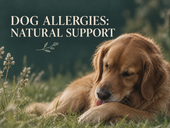
If your dog is constantly licking their paws, dealing with recurring ear irritation, scratching nonstop, or struggling with chronic skin flare-ups, food may be one piece of the puzzle.
These symptoms are often blamed on environmental allergies alone, but food sensitivities, food allergies, and digestive imbalances can sometimes overlap with recurring skin and paw issues - especially when the same problems keep coming back despite shampoos, creams, ear cleaners, or seasonal allergy support.
You may also notice digestive clues alongside the skin symptoms: chronically soft stool, excessive gas, inconsistent poop, occasional diarrhea, lip licking, gulping, or discomfort after eating.
When your dog is dealing with itchy skin, paw licking, recurring ear problems, and digestive issues at the same time, it may be worth looking beyond the surface symptoms and taking a closer look at their diet and overall gut health.
Instead of simply switching from one dog food to another, a more complete approach looks at what your dog is eating, what ingredients they may not tolerate, how their digestive system is functioning, and how you can support a healthier gut environment long term.
Here are four places I recommend starting.
What Do We Mean by Food Intolerances and Sensitivities?
When people talk about a dog having a food intolerance, food sensitivity or food allergy, they’re often describing a recurring adverse reaction to something in the dog’s diet.
That reaction doesn’t always look like an upset stomach.
For many dogs with food-related reactions, some of the most noticeable signs are itchy skin, constant paw licking or chewing, recurring ear irritation, redness, hot spots or repeated yeast and skin problems. Digestive signs such as soft stool, gas, diarrhea or vomiting can occur alongside the skin symptoms as well. Food allergies in particular commonly affect the skin, paws and ears.
Because the symptoms of food reactions can overlap with environmental allergies, parasites and other conditions, symptoms alone can’t tell you exactly what’s causing the problem. A properly conducted elimination diet followed by reintroduction remains the most reliable way to identify a food-related allergy.
For the purposes of this article, when I talk about digestive intolerances or food sensitivities, I’m talking broadly about dogs who seem to react poorly to certain foods—whether those signs are showing up in the gut, on the skin, or both.
1. Stop Switching Foods Randomly and Start Looking for Patterns
One of the first things many dog parents do when their dog has digestive problems is change their food.. again and again and then again.
Before long, the dog has eaten chicken, beef, salmon, lamb, turkey and several different brands and you’re no closer to knowing what they actually tolerate.
The reality is that your dog can be reacting to any type of food, it’s not just meat.
Instead, start keeping track of what goes into your dog’s body and what happens afterward.
This can help you begin identifying patterns instead of constantly reacting to symptoms.
For suspected food allergies, you can either give your dog an intolerance test or properly conduct an elimination diet followed by a food challenge is what is considered the most reliable method of identifying a food trigger. Diet trials should be done strictly for around eight weeks or longer, without treats or other foods sneaking into the diet.
2. Simplify Your Dog’s Diet
When a dog’s digestive system is already struggling, feeding more and more different ingredients isn’t necessarily better.
A complicated rotation of proteins, grains, vegetables, treats, chews and table scraps can make it extremely difficult to determine what your dog actually tolerates.
The goal is not necessarily to feed a restricted diet forever. It’s to create a clearer picture of what is working and what isn’t. Once you heal the digestive system, most dogs will start to tolerate their trigger foods again and you can make the diet more varied over time.
3. Support the Gut - Don’t Just Remove Foods
This is the piece I see overlooked most often.
Finding and removing a food your dog doesn’t tolerate is important but that doesn’t necessarily mean your work is finished.
The intestinal tract does much more than simply digest food. The intestinal lining acts as an important barrier, while the microorganisms living in the gut help support digestion, nutrient absorption, immune function and overall health.
When the gut environment becomes disrupted, signs don’t always show up only as digestive upset. Some dogs may have soft or inconsistent stool, gas, vomiting or other GI symptoms, while dogs with adverse food reactions may also struggle with itchy skin, constant paw licking or chewing, recurring ear irritation, redness, hot spots or repeated yeast and skin problems. In some dogs, the digestive and skin symptoms appear together.
That’s why, when I’m looking at a dog with recurring food-related issues, I don’t just focus on removing the suspected trigger. I also look at how we can support the intestinal lining and build a healthier gut environment at the same time.
This is why I created Furbal Remedies Leaky Gut Reset Powder as a foundational digestive-support product.
Leaky Gut Reset combines:
L-glutamine to nourish intestinal cells, marshmallow root and aloe vera to provide soothing mucilage for irritated digestive tissues, and a combination of soil-based probiotics + prebiotic FOS to support a healthier gut microbiome.
Rather than being another temporary “tummy fix,” it’s designed to provide consistent daily support for the digestive environment.
And every purchase of Leaky Gut Reset Powder also includes my complete Digestive Intolerance Course + Recommended Supplement Guide, so you aren’t simply buying another supplement and wondering what to do next.
You’ll learn more about how I approach food intolerances, recurring digestive symptoms and building a more complete gut-support plan for your dog.
If you’re looking for a place to start on your own, this is the option I recommend starting with.
4. Support the Microbiome Slowly and Consistently
When pet parents hear “gut health,” probiotics are often the first thing they reach for.
They can certainly be useful but digestive health isn’t about throwing as many probiotics and supplements into the bowl as possible.
The gut microbiome is an ecosystem. Sudden food changes, illness, antibiotics, dietary changes and other stressors can all influence digestion.
Depending on the dog, digestive support may include probiotics, prebiotic fibers, soothing herbs, appropriate dietary fiber and nutrients that support the intestinal lining.
If your dog’s stomach is already sensitive, introduce changes gradually whenever possible. Adding a new food, three supplements, probiotics and a new treat at the exact same time makes it nearly impossible to know what helped or what caused a new problem.
Start with a foundation, give it time, track your dog’s response and then build from there.
That’s one reason Leaky Gut Reset combines several foundational forms of digestive support into one daily powder rather than requiring you to create an entire supplement cabinet yourself.
Where Should You Start?
If you’ve been bouncing from food to food and supplement to supplement trying to figure out your dog’s digestive issues, start simple.
For the DIY pet parent:
Start with Leaky Gut Reset Powder + the included Digestive Intolerance Course. You’ll have the foundational digestive-support powder plus the education you need to begin putting the pieces together.
If you have one specific question:
My Quick Herbal Guidance option gives you personalized written herbal and supplement guidance for one dog and one primary concern.
If your dog’s case is more complicated:
If you’re dealing with several chronic concerns or you want help sorting through diet, supplements and your dog’s bigger picture, my 30-Day Personalized Herbal Guidance offers a more individualized level of support.
You don’t necessarily need another random supplement.
Sometimes you need a clearer plan.
- Start with the gut.
- Simplify what you’re doing.
- Pay attention to patterns.
- Support the digestive environment consistently
..and build from there.
Bringing herbal wisdom to pet care.